
How do you read so much?
It's actually just + − × ÷

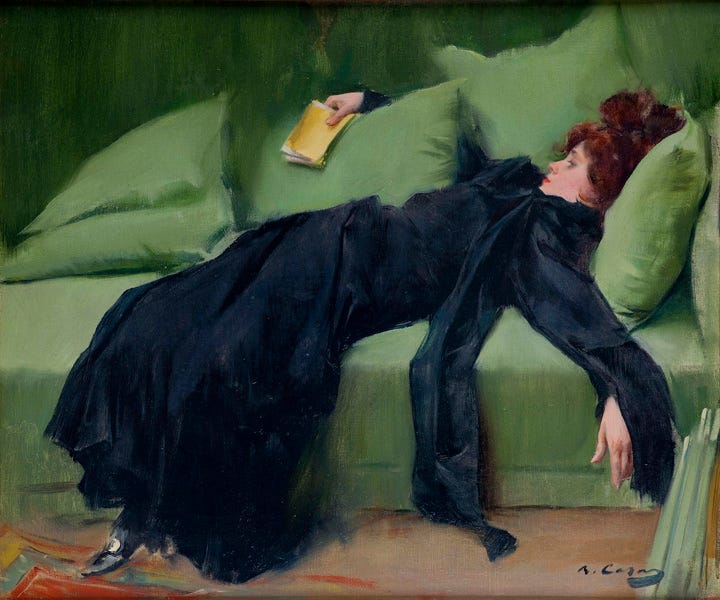
“I’m not a fast reader, I just spend a lot of time reading.”
This line tumbles out of me at least once a week, usually after someone asks one of the questions I hear most often: “How do you read so much?”
It’s a fair curiosity. I read between 96 and 100 books a year — eight or nine a month, all faithfully chronicled in my monthly summaries. It is, by any measure, a lot of reading, and the simplest explanation is that I genuinely enjoy it.
Before I go any further, a small caveat. I’m not suggesting that anyone should read the way I do, or that a triple-digit reading year is some kind of gold standard. Plenty of people don’t want to read that much, and they absolutely don’t need to. This guide is simply for anyone who wants to read more and is looking for practical ways to make space for books.
Inspired by a post from Grace Smith — a reader who sails through 100 to 200 books a year and wrote a wonderfully thorough breakdown of her approach — I thought I’d put my own answer in writing.
So how do I read so much? The answer is kind of unromantic: it’s just math.
Economics
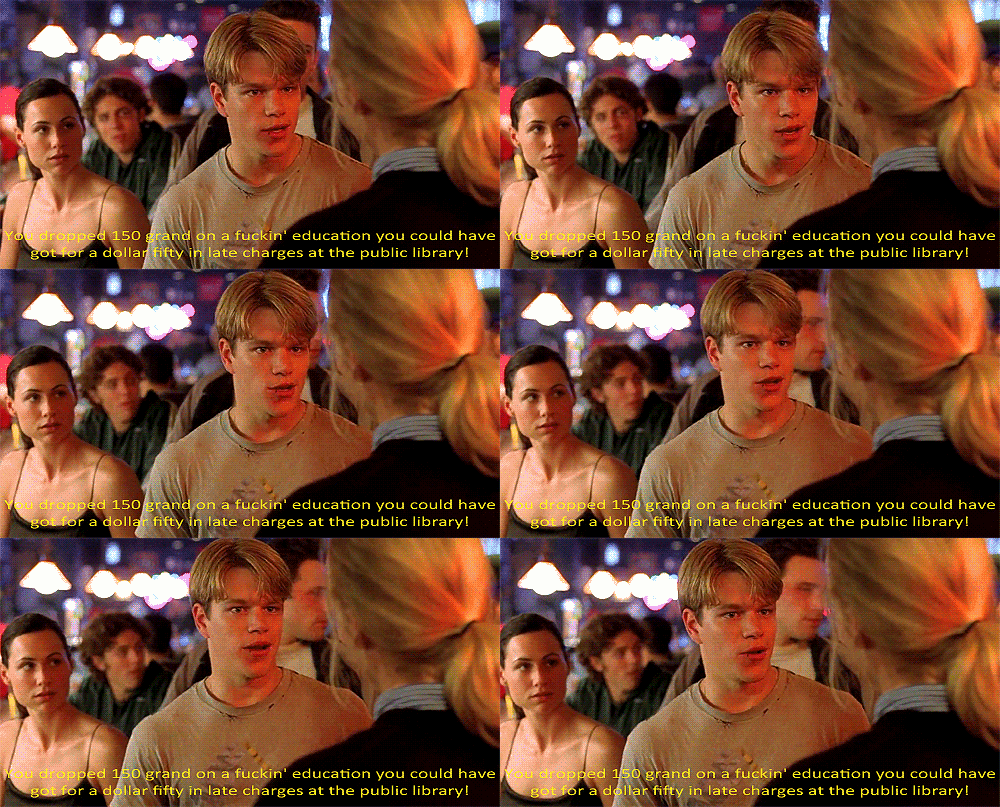
Reading can be an expensive hobby. I’d estimate that my own reading habit costs me about 150 USD a month based on the average price of a book — roughly 1,800 USD a year. Not a trivial sum (plus, where would I put them all?!). Which is why, if you want to read more without straining your wallet, the library is your closest ally.
I get all my books from the American Library in Paris, the largest English-language lending library in Europe. They are a private library and, despite the name, not affiliated with the government of the United States of America; instead, they are funded by members and donors. Memberships cost 15 euros (about 17 USD) a month — about half the cost of one new release novel. I pay for this because I read mostly in English, and the Paris public library system carries mostly French books (of course).
But prior to living in Paris, I got all my books for free from the public library. That will be the case for most people in the world, who read in the official language of the city in which they reside.
Of course, if you can afford to purchase everything you want to read, go off! Support the authors and publishers you love, and build that personal library! (And if I’m coming to visit, let me borrow a book?)
Algebra
We’re going back to high school! Let’s talk about reading pace and reading time.
As I wrote earlier, I am not a fast reader. I read about a page per minute, which is actually very normal. A typical book page holds 250-300 words, and the average reading pace for a work of fiction is 260 words per minute.
Thus, for a 300-page book — which is a common length for novels — most readers will need about 300 minutes, or five hours, to finish it. Looking at it this way, reading time is countable, predictable, modular. Which brings us to the fun part.
Applying the Formula
Start by asking yourself, how much time do you want to spend reading?
Notice that I didn’t say “how many books do you want to read?” If you are trying to read more, it helps to frame this as a desire, something to do with pleasure, rather than as a productivity goal. How much time can you give to something that you want to do? (And there are no wrong answers.)
If you can find 30 minutes a day, you can finish a 300-page book in 10 days.
Got an hour? You’ll be done reading it in five.
And that hour can happen in chunks. Fifteen minutes on your commute, each way, and thirty minutes before bed. Pockets of time stitched together into a quilt of pages read.
I use this calculation instinctively now. It helps me pack the right number of books for a trip, triage my library holds, and decide whether I’m willing to commit to a 500-page tome. Eight hours is a serious relationship; I want to know I’m ready before I bring it home in my satchel.
It Adds Up
I joke about my reading habit, but it really is that — a habitual practice lovingly built over the last three decades. Here are some tips from my reading toolkit:
Place holds at your public library. And learn how to use their hold system! Many let you pause holds if you’re traveling or simply overloaded. I also use my hold list as a living “to-read” queue. And getting that pickup notification always feels like a sweet little gift.
Pair books with rituals. With your morning tea, or while the laundry is in the dryer. Get a little association going and watch your reading time climb.
Be prepared. I nearly always have a book with me. If my dining companion goes to the restroom or I am early for an appointment, I drift to the page instead of my phone.
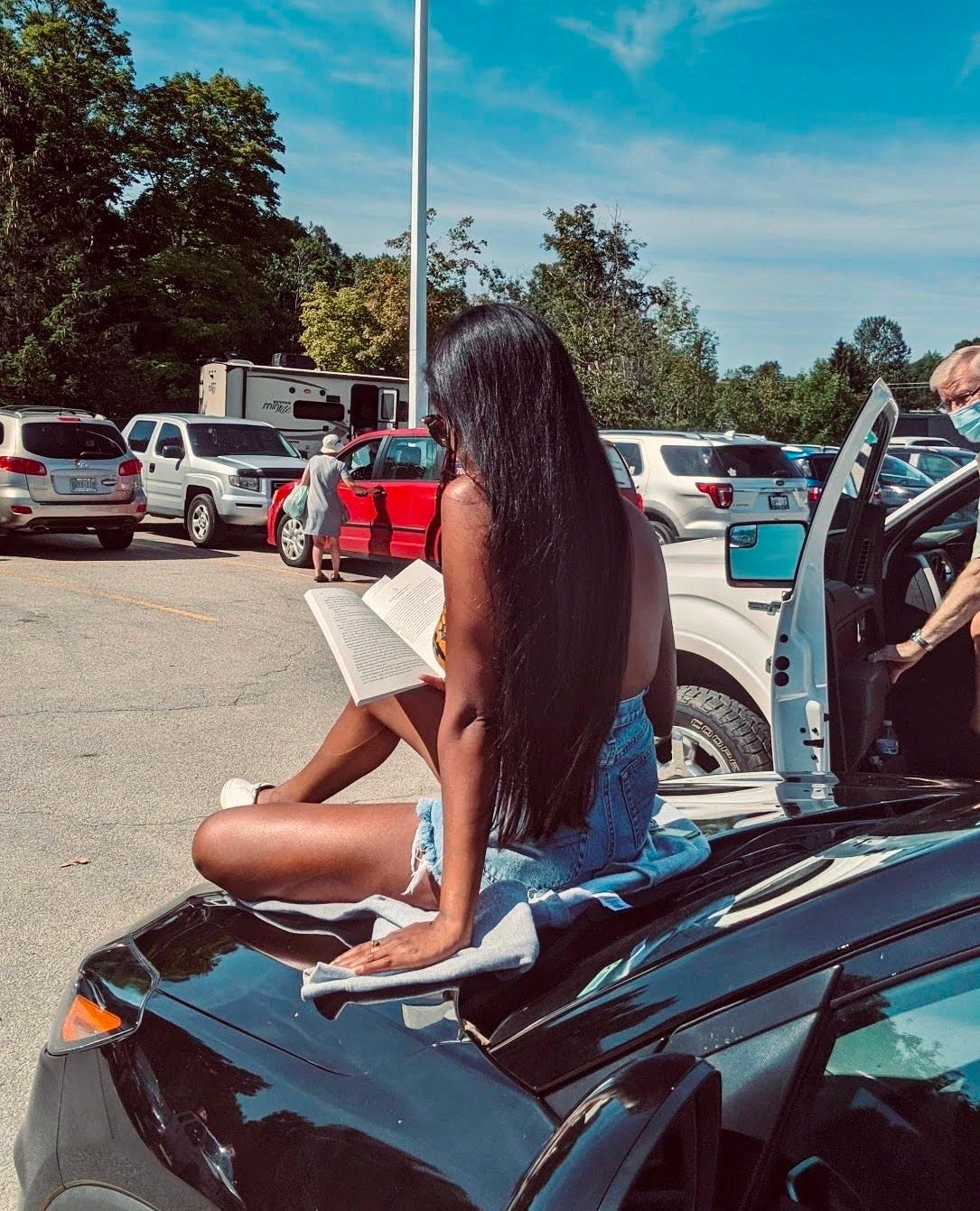
I know not everyone wants to read a hundred books a year — but everyone deserves a little time with a good one. A minute here, another there, and before long, the hours accumulate — and so do the pages.
Bibliography
Porter Anderson, “BookNet Canada’s Consumer Survey: Rising Book Prices” in Publishing Perspectives, May 22, 2024, accessed November 22, 2025.
Marc Brysbaert, “How many words do we read per minute? A review and meta-analysis of reading rate” in Journal of Memory and Language, Vol. 109, December 2019.
CBS Boston, “Boston Public Library To Eliminate Late Fines For Everyone,” CBS News, April 14, 2021, accessed November 2, 2025.
Andrew Gerber, “Fine Farewells: LJ’s 2022 Fines and Fees Survey” in Library Journal, September 28, 2022, accessed November 2, 2025.